
"heating point"
4000 article(s) found

Hand coffee maker brand popularity list recommended [2019 latest version] key points for the selection and purchase of hand coffee pot
Professional coffee knowledge exchange more coffee bean information Please follow the coffee workshop (Wechat official account cafe_style) if you want to easily make good hand coffee at home, you can't do without a handy hand brewer. Many hand-made pots on the market have a wide range of shapes, materials, and even prices, but most of them have very similar shape features.

Why do coffee beans produce oil? roast coffee beans? what do you mean by two explosions? how to judge the tipping point?
Roasting coffee beans is really a magical thing: throw some humble green seeds into a hot environment, and in less than 15 minutes (or about), they will become magical beans, grind and add some hot water to become a delicious and healthy coffee drink. If we think about it carefully, we will know that a lot of changes have taken place inside the coffee beans in this process. Although there is a promise

The difference between raw and cooked coffee beans Brand Roasting Degree Introduction
The difference between raw coffee beans and cooked coffee beans is introduced to the degree of roasting [Arabica] Coffee has a variety and broad potential flavor. Arabica coffee produced in different regions, at different altitudes and in different climates usually has its own characteristics and can show very different personality flavors. Arabica coffee smells like grass when unroasted

Basic chemical reactions that occur during coffee roasting
Many thermal and chemical reactions take place during baking: decarbonation, dehydration of quinic acid, fragmentation, isomerization, polymerization, and complex sugar reactions (caramelization). The main thermally reactive components are monosaccharides and sucrose, chlorogenic acid, displaced amino acids, and trigonelline amide. Both aravinone and calactose in polysaccharides are transferred, and basic sulfurization contains hydroxyamino acids.

Mantenin Coffee Bean characteristic matching proportion Flavor description Taste Grinding scale introduction
Mantenin coffee bean characteristic matching proportion flavor description taste grinding scale variety introduction bean quality soft and hard and so on will be because of its uneven baking phenomenon, the professional point, this is due to the different specific heat of coffee beans, the concept of specific heat generally refers to coffee beans increased by 1 degree Celsius, the heat needed. The particle size of beans varies with different water content, although they are all heated with the same amount of heat.

Roasting of coffee beans | what are the roasting defects in coffee | which belong to baking defects
Professional coffee knowledge exchange more coffee bean information please pay attention to coffee workshop (Wechat official account cafe_style) coffee flavor defects, some are from raw bean defects, some are produced during roasting, and some are produced during brewing, today Qianjie Coffee first to talk about what defects will occur in roasting! The definition of roasting is called coffee baking.

Siphon coffee appliances and characteristics--siphon coffee knowledge points
Professional barista exchanges, please pay attention to coffee workshop (Weixin Official Accounts cafe_style) Siphon is a tool originated in Germany, which uses the pressure generated when water boils to cook coffee. The structure of the siphon pot is an upper pot and a lower pot communicated by a conduit in the middle. The lower pot filled with hot water will be heated by an alcohol lamp or a gas lamp first.

Relieve heatstroke, tea and coffee are also effective!?
Communication of professional baristas Please pay attention to the coffee workshop (official Wechat account cafe_style). It is so hot that I want to eat ice and drink cold drinks to cool off, but this may be counterproductive. Not only can it not relieve the heat, but it may also lead to heatstroke. Traditional Chinese medicine doctors have wonderful ways to teach you how to eliminate heat stroke and prevent heat stroke in summer. Drinking hot coffee can relieve the symptoms of heat in the middle yin. A hot summer day
The basic chemical reaction of coffee roasting process
Many thermal and chemical reactions take place during baking: decarbonation, dehydration of quinic acid, subdivision, isomerization, polymerization, and complex sugar reactions (caramelization). The main components of the thermal reaction are monosaccharides and sucrose, chlorogenic acid, free amino acids, and fenugreek amide. Both aravinose and calactose in the polysaccharides are transferred, and the basic vulcanization contains hydroxylated amino acid.
The basic chemical reaction that takes place during coffee roasting.
Many thermal and chemical reactions take place during baking: decarbonation, dehydration of quinic acid, subdivision, isomerization, polymerization, and complex sugar reactions (caramelization). The main components of the thermal reaction are monosaccharides and sucrose, chlorogenic acid, free amino acids, and fenugreek amide. Both aravinose and calactose in the polysaccharides are transferred, and the basic vulcanization process includes hydroxylamine.

The basic chemical reactions that take place during coffee roasting
Many thermal and chemical reactions take place during baking: decarbonation, dehydration of quinic acid, subdivision, isomerization, polymerization, and complex sugar reactions (caramelization). The main components of the thermal reaction are monosaccharides and sucrose, chlorogenic acid, free amino acids, and fenugreek amide. Both aravinose and calactose in the polysaccharides are transferred, and the basic vulcanization process includes hydroxylamine.

Basic chemical reactions of coffee beans during coffee roasting
Many thermal and chemical reactions take place during baking: decarbonation, dehydration of quinic acid, subdivision, isomerization, polymerization, and complex sugar reactions (caramelization). The main components of the thermal reaction are monosaccharides and sucrose, chlorogenic acid, free amino acids, and fenugreek amide. Both aravinose and calactose in the polysaccharides are transferred, and the basic vulcanization process includes hydroxylamine.

The basic chemical reactions that take place during coffee roasting
Many thermal and chemical reactions take place during baking: decarbonation, dehydration of quinic acid, subdivision, isomerization, polymerization, and complex sugar reactions (caramelization). The main components of the thermal reaction are monosaccharides and sucrose, chlorogenic acid, free amino acids, and fenugreek amide. Both aravinose and calactose in the polysaccharides are transferred, and the basic vulcanization process includes hydroxylamine.

Semi-automatic espresso machine to buy points of home espresso machine which kind of easy to use and affordable?
Professional coffee knowledge exchange More coffee bean information Please pay attention to coffee workshop (Weixin Official Accounts cafe_style) If canned coffee and super coffee can no longer satisfy your taste buds, but you don't have so much money and time to spend in cafes, it's better to prepare an Italian coffee machine at home! You can choose coffee according to your preferences and budget

The basic chemical reactions that take place during coffee roasting.
Many thermal and chemical reactions take place during baking: decarbonation, dehydration of quinic acid, subdivision, isomerization, polymerization, and complex sugar reactions (caramelization). The main components of the thermal reaction are monosaccharides and sucrose, chlorogenic acid, free amino acids, and fenugreek amide. Both aravinose and calactose in the polysaccharides are transferred, and the basic vulcanization process includes hydroxylamine.

The principle of operation in a baking machine
Professional coffee knowledge exchange more coffee bean information please follow the coffee workshop (Wechat official account cafe_style) roasting coffee converts the chemical and physical properties of raw coffee beans into roasted coffee products. The roasting process causes raw beans to expand and change their color, taste, smell and density, resulting in the special flavor of coffee. Unbaked coffee beans and roasted coffee beans contain
The basic chemical reaction of coffee technology in the process of coffee roasting
Many thermal and chemical reactions take place during baking: decarbonation, dehydration of quinic acid, subdivision, isomerization, polymerization, and complex sugar reactions (caramelization). The main components of the thermal reaction are monosaccharides and sucrose, chlorogenic acid, free amino acids, and fenugreek amide. Both aravinose and calactose in the polysaccharides are transferred, and the basic vulcanization process includes hydroxylamine.
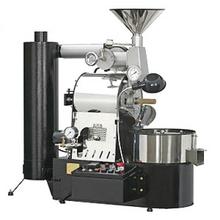
The Chronicle of HB Coffee Roasters understand the History of HB Coffee Roasters
In the early days, an all-stainless steel 1kg roaster bore the brunt of the drum miso to the front panel, making a clanking sound. It was a headache at the time. This problem adds a traction spring to the rear bearing of the later generation to prevent the drum from moving forward and miso to the panel; the primary partition is too thin and is made of stainless steel, and the coefficient of expansion of the material is too large when heated, resulting in deformation.

Coffee roasting process? What is the principle of coffee baking?
Professional coffee knowledge exchange more coffee bean information please follow the coffee workshop (Wechat official account cafe_style) roasting coffee converts the chemical and physical properties of raw coffee beans into roasted coffee products. The roasting process causes raw beans to expand and change their color, taste, smell and density, resulting in the special flavor of coffee. Unbaked coffee beans and roasted coffee beans contain
Characteristics of exquisite Blue Mountain Coffee how much is a box of Blue Mountain Coffee
Because of its high price, Blue Mountain Coffee has a relatively fixed consumer group, and its market is mainly concentrated in Japan, followed by some European and American countries. Coffee beans are full in shape and slightly larger than ordinary beans. Its taste is very subtle, sour, fragrant, mellow, sweetness is uniform and strong, slightly bitter, harmonious taste, excellent flavor, suitable for individual coffee. It uses moderate.